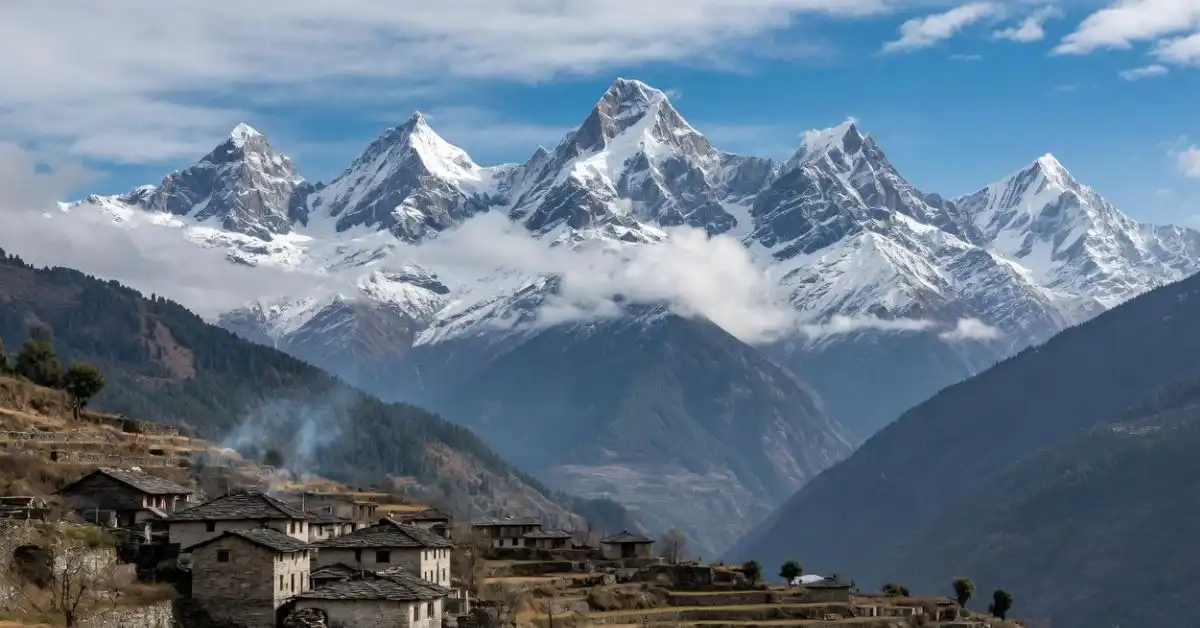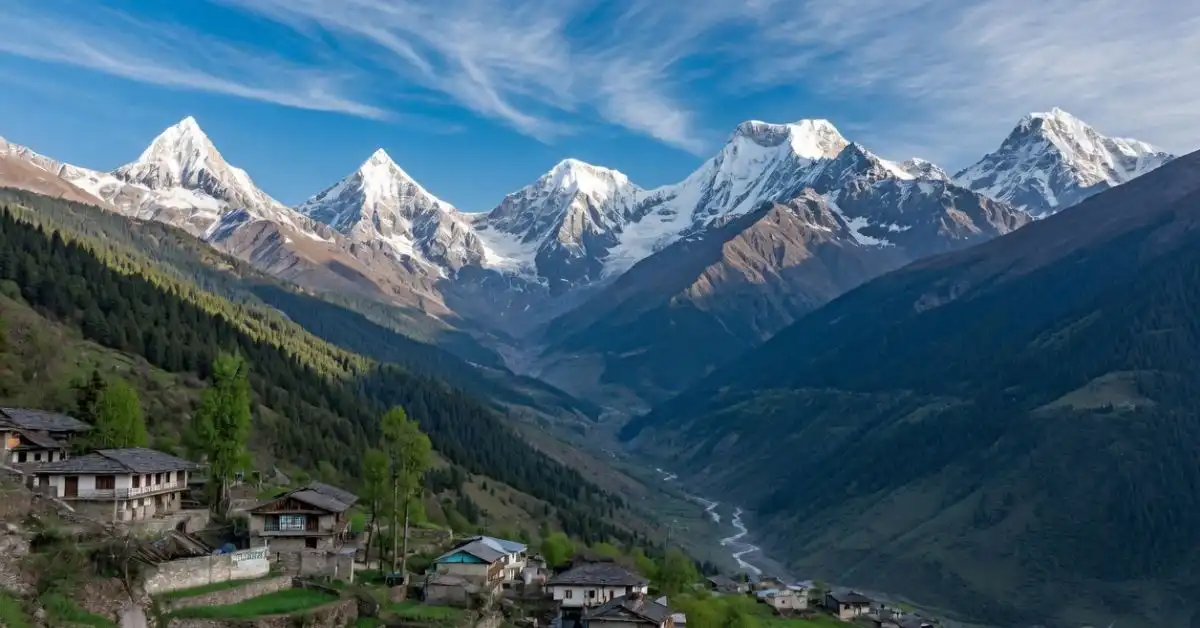
Ride through 12 ancient Rang tribal villages to the base of five snow-capped peaks the locals call the "five-pointed oven." A 7-day Royal Enfield expedition deep into Uttarakhand's least-explored border valley - river crossings, ITBP checkposts, and homestays with a community that's traded across this border for centuries. ILP assistance fully included.
Darma Valley sits in the far eastern corner of Kumaon, carved by the Dhauliganga river along the Indo-Tibet border in Pithoragarh district. For centuries, this was a thriving trade corridor - the Rang community carried wool, salt and barley across the passes into Tibet until the 1962 war shut the border and ended that trade overnight. What's left is one of the most culturally intact valleys in the Indian Himalayas.
Where road construction has reached Dantu and Dugtu villages in recent years, you can now ride almost the entire way to Panchachuli Base Camp - something that took trekkers four days on foot less than a decade ago. You'll cross rivers, pass ITBP checkposts, and stay with Rang families whose wooden houses, festivals and language remain unchanged by the modern world outside.
Three sides of the same restricted valley - a high-altitude base camp, an ancient tribal road, and a community that's lived on this border for generations.
A cluster of five snow-capped peaks (6,334 m to 6,904 m) that, according to local legend, is where the Pandavas cooked their final meal before ascending to heaven. The base camp itself sits at roughly 3,960 m, reached by a short trek from Dantu or Dugtu village.
A road that's improved dramatically in recent years but still demands respect - narrow stretches hugging the cliffside, multiple water crossings, and two ITBP checkposts at Sela and Baling where your ILP gets checked. The ride itself is half the experience.
Sela, Nagling, Baling, Dantu and Dugtu are home to the Rang (Shauka) community - one of the oldest Himalayan trading peoples, with distinct wooden architecture, language, and festivals like Bisu and Harela still celebrated today.
Darma Valley sits inside an Inner Line Permit zone because of its proximity to the India-Tibet border. The process is simple, but it has to be done in person.
Foreign nationals need a separate Protected Area Permit, with extra documentation and Ministry of Home Affairs approval, and border policy can change with little notice - confirm current rules before you commit to dates. For Indian nationals, the process is straightforward: visit the SDM office in Dharchula in person with your documents, and you'll usually walk out with your permit the same day.
Dharchula is your last real town before the valley, and the SDM office here issues every ILP for the region. There's no online application as of 2026 - this has to be done in person on the day you arrive.
You'll need a government photo ID (Aadhaar or passport), two passport-sized photographs, and a rough route plan covering your dates and destinations within the valley.
Processing usually takes just a few hours, and there's no fee involved. Keep multiple photocopies of the approved permit - you'll need to show it more than once on the route ahead.
Beyond Sobla, the Indo-Tibetan Border Police register every traveller at checkposts in Sela and Baling. Carry your permit and ID at all times - these checks are routine but mandatory.
Dharchula is your last stop with reliable cash withdrawal, fuel and mobile signal. Beyond Sobla, expect no network at all and very limited digital payment options.
Wander Sky Permit Assistance: Every Darma Valley package includes complete ILP handling. Send us your ID and photos in advance, and our team manages the SDM office visit in Dharchula the moment you arrive - so the only thing on your mind that morning is the ride ahead, not paperwork.
Darma Valley is buried under snow for most of the year - your riding window is genuinely narrow.
| Period | Road & Weather Condition | Temperature Range | Recommendation |
|---|---|---|---|
| May – Mid-June | Melting snow, fresh meadows, clear peak views | 3°C – 22°C | Best greenery and wildflowers at their peak |
| Mid-June – August | Heavy monsoon, landslide risk on Dharchula-Sobla stretch | 10°C – 20°C | Avoid riskiest months on the route |
| September – October | Monsoon clears, sharpest mountain visibility | 5°C – 15°C | Best many riders' favourite window |
| November – April | Heavy snowfall, villages evacuate, route closed | Below 0°C at altitude | Closed Rang families migrate to lower Dharchula |
May and early June give you wildflowers and the freshest post-winter green, but you're riding right as snowmelt swells the river crossings. September and October are calmer - the monsoon has cleared, the road has stabilized, and visibility of the Panchachuli range is at its sharpest. Wander Sky's recommended window is late September.
This is a genuine expedition - rough roads, river crossings, and total disconnection demand real preparation.
At least 6 months of regular riding experience is recommended, ideally with some off-road exposure. The road past Sobla is narrow, frequently broken, and crosses 10-15 water channels - a bike with good torque and ground clearance matters more than raw horsepower here.
Panchachuli Base Camp sits close to 4,000 m, so oxygen levels drop noticeably. Riders with heart, lung or chronic blood-pressure conditions should consult a doctor before booking. The itinerary builds in acclimatization time at Dharchula and Dantu village before the final push.
Beyond riding skill, this trip asks for comfort with genuine disconnection - no mobile signal, no digital payments, and basic homestay accommodation past Dharchula. Riders who need constant connectivity or guaranteed luxury stays should consider a different route.
The full route runs from Rishikesh through Champawat and Pithoragarh to Dharchula, then deep into the restricted valley.
Route order: Rishikesh → Tanakpur/Champawat → Pithoragarh → Dharchula (ILP processing) → Tawaghat → Sobla (last reliable fuel and network) → Sela (ITBP checkpost) → Baling (ITBP checkpost) → Dantu/Dugtu village → short trek to Panchachuli Base Camp → return via the same route to Dharchula → Rishikesh.
Two ways to experience this restricted border expedition, depending on how much time you have.
All prices per person, double sharing basis. 5% GST applicable. Indian nationals only - foreign nationals need a separate Protected Area Permit and should confirm current rules before planning.
Our flagship 7-day expedition at ₹22,999 from Rishikesh, covering Panchachuli Base Camp and the Rang tribal villages.
Check in, bike allotment and full route briefing for the long ride ahead. Submit ID and photos so ILP processing can begin the moment you reach Dharchula.
A long first day through the Kumaon foothills, breaking the 530 km Rishikesh-Dharchula stretch into two manageable legs. Overnight in Champawat.
Ride via Pithoragarh into Dharchula, the gateway town to the valley. Visit the SDM office for ILP processing - usually completed the same day. Stock up on cash, fuel and supplies, since this is your last stop with reliable network.
Ride via Tawaghat to Sobla, then continue on the rougher valley road past Sela and Baling ITBP checkposts, through multiple river crossings, to Dantu village. Settle into a Rang family homestay for the night.
A short trek from Dantu or Dugtu village to the base of the Panchachuli range - five peaks rising in front of you above the Meola glacier. Return to Dantu for a second night with your homestay family.
Ride back through Baling and Sela checkposts to Sobla and Dharchula, with time to explore the Rang villages along the way and pick up phone signal again. Overnight in Dharchula.
The long ride back retracing your route through Pithoragarh and Tanakpur. Drop bikes at Rishikesh, collect your completion certificate, and head home with stories most riders never get to tell.
All our packages start from Rishikesh. Here's how to get here before joining the expedition.
Delhi to Rishikesh is roughly 240 km, about 5-6 hours by road, or take the Shatabdi Express to Haridwar and a short cab ride onward. Arrive a day or two early to rest before the long ride to Dharchula begins.
Fly into Dehradun's Jolly Grant Airport, the closest to Rishikesh at around 35 km, or fly to Delhi and continue by road or train. Most riders fly in 1-2 days early to settle in before the long expedition ahead.
Haridwar to Rishikesh is just 25 km, the easiest starting point of all. If you're sending your bike ahead by train or carrier for this route, Haridwar railway station handles freight reliably.
Everything you need before you commit to this restricted border expedition.
This expedition offers something almost no other Himalayan ride can - genuine, untouched tribal culture on an active border.
The motorable track to Dantu and Dugtu has only existed for a few years. You're among the first generation of riders to cover most of this route by bike rather than on foot.
The Rang community's wooden architecture, language and festivals have survived largely unchanged since their trading days with Tibet, before the 1962 war ended that exchange.
Few viewpoints in India let you see an entire mountain range - all five Panchachuli summits - from a single spot the way Dantu village does.
No signal, no digital payments, no crowds past Sobla. For riders craving a real break from constant connectivity, this route delivers it completely.
The ILP process and ITBP checkpost logistics are the biggest barrier to this trip for independent riders. Wander Sky removes that barrier entirely.
This is one of the few places where civilians can legally ride deep into an active India-China border valley, under full ITBP protocol.
Everything you need to know, answered in plain language, before you commit to this restricted border expedition.
Yes. Darma Valley sits inside an Inner Line Permit zone because it runs close to the India-Tibet border, so an ILP is required for every Indian traveller heading past Sobla. The permit is issued free of charge at the SDM office in Dharchula, and ITBP checkposts at Sela and Baling check it again along the route. Foreign nationals need a separate Protected Area Permit and should confirm current rules before planning a trip, since border policy can change with little notice.
Visit the SDM office in Dharchula in person with a government photo ID such as Aadhaar or a passport, two passport-sized photographs, and a rough outline of your travel dates and route. There's no online application as of 2026, so this has to be done the day you arrive in Dharchula. Processing usually takes a few hours and there's no fee. Wander Sky handles this entire process as part of every Darma Valley package.
Almost. The Border Roads Organisation has pushed the motorable road from Dharchula through Sobla and on to Dantu and Dugtu villages, both within 2 to 4 km of the base camp itself. From Dantu or Dugtu, it's a short trek on foot to reach Panchachuli Base Camp - you won't need to walk the full multi-day trek that older guides describe. Expect a rough, narrow road with several water crossings, so a bike with reasonable ground clearance and torque matters more than outright power.
Dharchula, the gateway town to Darma Valley, is roughly 530 km from Rishikesh, which usually takes 2 full days of riding broken up through Tanakpur or Champawat. From Dharchula, it's another 70 to 80 km of rough mountain road to reach Dantu village near the base camp.
May to mid-June and September to October are the two reliable windows. Spring brings melting snow, green meadows and clear peak views, while autumn offers the sharpest visibility once the monsoon clears. July and August bring heavy rain and a real landslide risk on the Dharchula-Sobla stretch, and the entire valley shuts down under snow from November through April.
The Rang, also called Shauka or Bhotiya, are an indigenous Himalayan community who have lived in Darma Valley for centuries, historically trading wool, salt and barley across the border into Tibet. That trade stopped after the 1962 war, but the community's wooden architecture, the Bisu and Harela festivals, and their distinct language and customs are still very much alive in villages like Sela, Nagling, Baling and Dantu.
Barely. Dharchula has reasonable BSNL and Jio coverage, but once you cross Sobla and enter the valley proper, expect almost no signal at all. Treat the entire route beyond Dharchula as off-grid and let people back home know in advance.
The package includes a Royal Enfield Himalayan with fuel, 6 nights of hotel or homestay accommodation including stays with Rang families in the valley, breakfast and dinner daily, complete ILP processing in Dharchula, a backup support vehicle, mechanic backup, and an experienced ride captain. Pricing starts at ₹22,999 per person.
Munsiyari offers distant, postcard-style views of the Panchachuli range along with better roads, cafes and infrastructure. Darma Valley gets you up close - you'll camp and ride within the range itself, through raw terrain and genuine tribal villages, with none of Munsiyari's tourist comforts. If you want comfort, Munsiyari works well; if you want an immersive mountain expedition, Darma Valley is the better choice.
The full expedition covering Panchachuli Base Camp and the Rang villages runs 7 days from Rishikesh. A shorter 6-day Express package covering just the base camp is also available for riders short on time. Either way, plan for at least 2 days of acclimatization and ILP processing around Dharchula before pushing into the valley.
A restricted border valley with 12 Rang tribal villages and a front-row seat to all five Panchachuli peaks. 7-day Royal Enfield expedition from Rishikesh, ₹22,999 all-inclusive with full ILP assistance.
Darma Valley Express · Full Expedition · Customized Border Tours From ₹18,999