Ride into a cold-desert valley sealed off for over five decades and reopened in 2015. A 5-day Royal Enfield tour through Harsil to Nelong Valley, the 150-year-old Gartang Gali bridge, and the abandoned village of Jadung. Permit assistance fully included.
Nelong Valley sits in Uttarkashi district, right against the Indo-Tibet border, inside Gangotri National Park. Until 1962, it was a thriving trade corridor between India and Tibet - traders moved wool, salt and jaggery across the Jadh Ganga gorge on a wooden bridge cut straight into the cliff face. The 1962 war shut all of it down overnight. The valley stayed closed to outsiders for 53 years, watched only by the Army and the ITBP, until the government reopened it to Indian tourists in 2015.
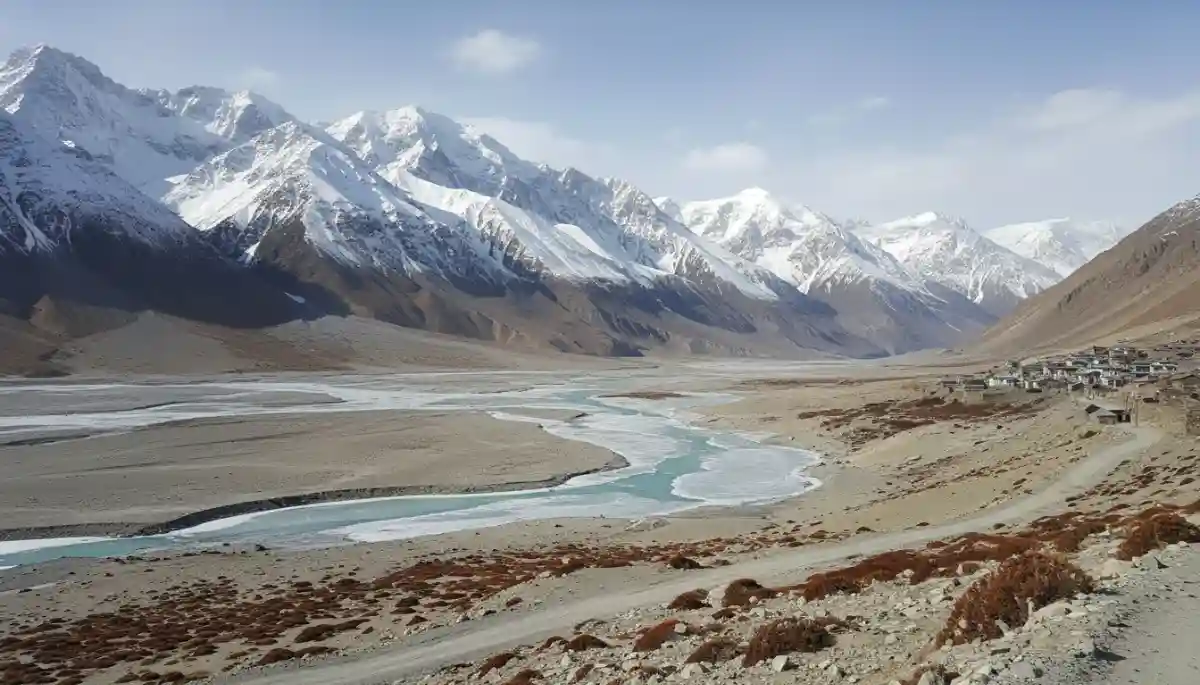
What you'll find today is a landscape that genuinely earns its nickname - rocky, treeless, high-altitude terrain that looks lifted straight out of Ladakh, without a fraction of the crowds. You'll ride past the abandoned ruins of Nelong village, cross into the historic Gartang Gali trade route, and pass through Jadung - both villages emptied out in 1962 and never resettled.
All three sit within the same Indo-Tibet border belt around Harsil and Bhaironghati, but each tells a completely different story.
A stark cold desert at 11,400 ft, ringed by bare granite cliffs and crossed by the Jadh Ganga river. Once a thriving Indo-Tibet trade post, now home to brown bears, blue sheep and the occasional snow leopard sighting.
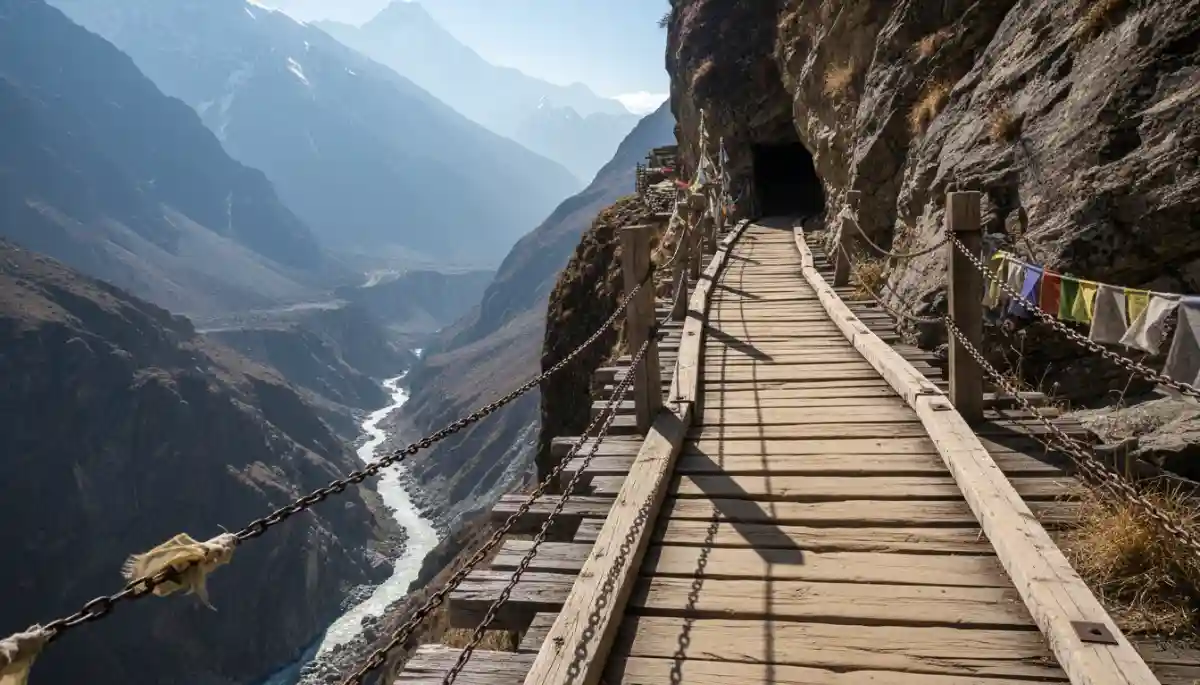
A wooden staircase-bridge carved into a sheer rock face by Peshawari Pathans over a century and a half ago, hanging directly above the Jadh Ganga gorge. Reached by a short, scenic 2.5 km hike from Lanka Bridge near Harsil.
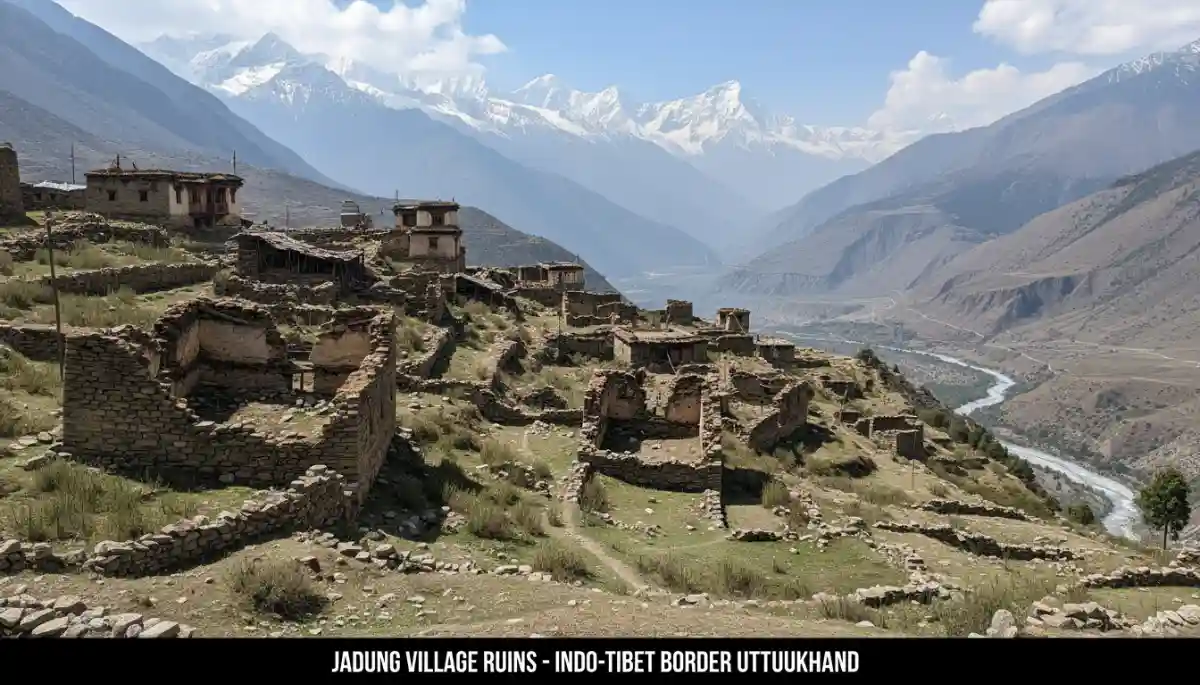
Once home to the Jadh (Bhotiya) community who traded across the Tibet border for generations, Jadung was evacuated entirely after the 1962 war. The empty stone structures still stand, a quiet, haunting reminder of a border that closed overnight.
Nelong Valley sits inside an Inner Line Permit zone, and the entire process is offline - there's no app, no website to apply through, just three physical offices in Uttarkashi.
Foreign nationals and NRIs cannot get this permit - Indian citizens only. Daily visitor numbers are capped, and beyond the Bhaironghati checkpoint, only Forest Department-approved vehicles are allowed to proceed. No overnight stay is permitted inside the valley itself; you must exit before evening, typically by 5 PM.
Draft an application addressed to the District Magistrate of Uttarkashi, stating your intent to visit Nelong Valley. List the full names of every traveller, including the driver, plus vehicle registration details. Attach photocopies of everyone's government ID and keep two extra sets of photocopies on hand.
Take your application to the District Collectorate office in Uttarkashi. Once your details check out, you'll receive a signed letter attached to your original application - this is your green light to move to the next office.
Carry your signed letter to the nearest police station - usually the Kotwali, about half a km from the Collectorate. They'll issue a Local Intelligence Unit report confirming there's nothing flagging your group as a security concern.
Return to the DM office with your signed, verified documents. Once everything checks out, the office issues your actual Nelong Valley permit. Keep it safe - you'll need to show it at the Bhaironghati checkpoint.
Since Nelong Valley falls inside Gangotri National Park, you'll also need approval from the DFO at Bhaironghati. Pay the National Park entry fee here too - roughly ₹250 per vehicle and ₹150 per person.
Report at the Bhaironghati checkpoint early - most operators recommend being there before 9 AM. There's no overnight stay allowed inside the valley, so plan your return to Harsil before 5 PM.
Wander Sky Permit Assistance: Every Nelong Valley package includes full permit handling. We start the paperwork the moment you reach Uttarkashi, run between all three offices on your behalf, and build a buffer day into your itinerary so a slow approval never costs you your ride to Nelong Valley itself.
Nelong Valley sits inside Gangotri National Park, which only opens once winter snow clears - so your riding window is tied directly to the park's own calendar.
| Period | Road & Park Condition | Temperature Range | Recommendation |
|---|---|---|---|
| May – June | Park reopens, snow walls still being cleared near Harsil | 5°C – 18°C | Okay - check road status before committing |
| July – August | Monsoon, landslide risk on the Uttarkashi-Harsil stretch | 10°C – 20°C | Avoid - heaviest rainfall of the year |
| September – October | Monsoon clears, road fully passable, clean mountain air | 0°C – 15°C | Best - most riders' top pick for this route |
| Early November | Cold, park nearing seasonal closure | -5°C – 8°C | Okay - confirm park status before you set out |
| December – April | Heavy snow, Gangotri National Park closed entirely | Below 0°C | Closed - no entry possible at any cost |
By the time the monsoon clears in September, the road between Uttarkashi and Harsil has stabilized, visibility is at its sharpest, and the cold-desert tones of Nelong Valley look their starkest under clear skies. May-June is workable too, but melting snow near Harsil can occasionally hold up the road in the early part of that window.
This route is more forgiving than some high-altitude expeditions, but it still asks for genuine preparation given the border protocol and altitude.
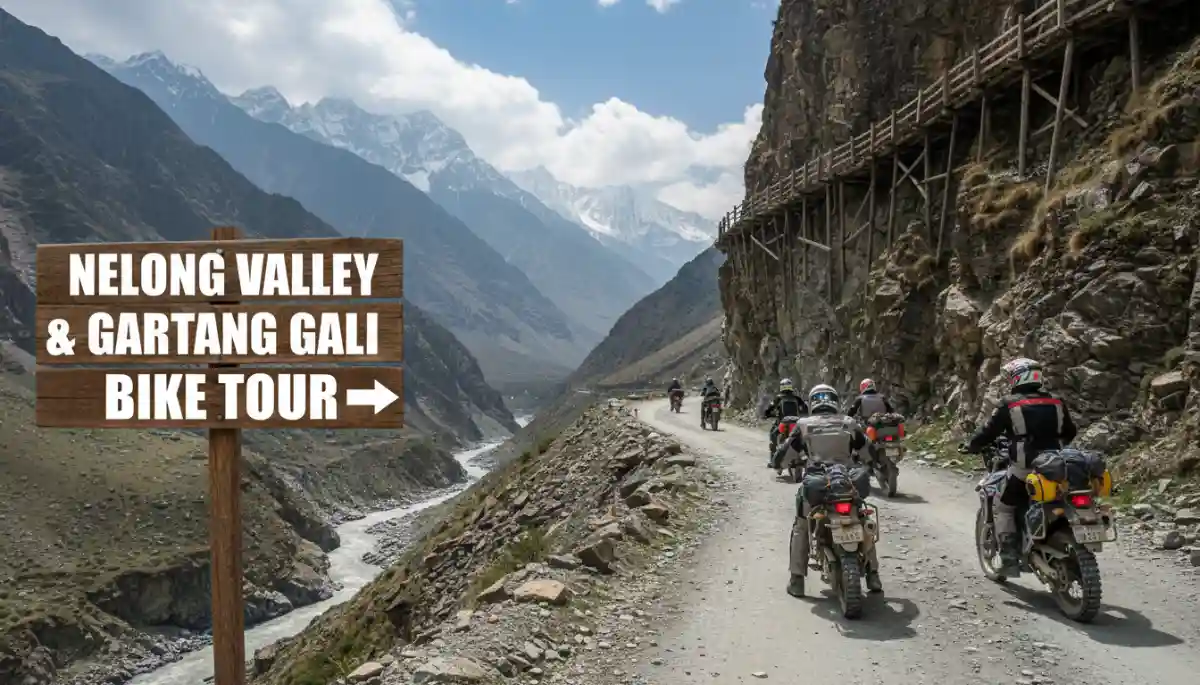
A few months of regular riding experience is a sensible baseline. The Uttarkashi-Harsil stretch is good tarmac for the most part, but the final approach into Nelong Valley has rougher, narrower sections that reward riders who are comfortable off smooth roads.
At 11,400 ft, this is moderate altitude rather than extreme - most riders adjust without serious trouble. Still, anyone with heart, lung, or chronic health conditions should check with a doctor first, and a fitness certificate is sometimes required as part of the permit process.
More than fitness, this trip tests your patience with bureaucracy. The three-office permit process can take anywhere from a single afternoon to several days if officials are unavailable. Riders who need a fully fixed, guaranteed schedule should build in slack or let Wander Sky handle the timing.
The full route runs from Rishikesh through Uttarkashi and Harsil, into the restricted border belt near Bhaironghati.
Route order: Rishikesh → Uttarkashi (permit processing) → Harsil (overnight base) → Bhaironghati checkpoint → Gartang Gali (2.5 km hike from Lanka Bridge) → Nelong Valley → Jadung village ruins → return to Harsil by evening → back via Uttarkashi to Rishikesh.
Two ways to experience this restricted border ride - a focused short trip, or a fuller route that adds Gangotri and Harsil sightseeing.
All prices per person, double sharing basis. 5% GST applicable. Indian nationals only - foreign nationals and NRIs cannot get a permit for this border zone.
Our flagship 5-day tour at ₹24,999 from Rishikesh, covering Nelong Valley, Gartang Gali, Jadung village and Gangotri.
Check in, bike allotment and full route briefing. Hand over your documents so the permit application can begin the moment you reach Uttarkashi. Evening Ganga Aarti at Parmarth Niketan.
165 km ride via Chamba and Dharasu. On arrival, the permit application goes straight to the DM office, followed by police verification. Overnight in Uttarkashi while paperwork moves through the system.
75 km of increasingly scenic riding along the Bhagirathi river, through Gangnani's hot springs and into Harsil's deodar forests and apple orchards. Permit collection finalized here or en route. Overnight in Harsil.
Early start through the Bhaironghati checkpoint and Forest Department clearance. Hike 2.5 km to Gartang Gali's wooden bridge, then continue into Nelong Valley's cold desert and past the abandoned ruins of Jadung village. Exit before evening - no overnight stay permitted inside. Return to Harsil for the night.
For the full package, a quick detour to Gangotri Dham before the long ride back. Drop bikes at Rishikesh, collect your completion certificate, and head home with a story almost nobody else has.
All our packages start from Rishikesh. Here's how to get here before joining the ride.
Delhi to Rishikesh is roughly 240 km, about 5-6 hours by road, or take the Shatabdi Express to Haridwar and a short cab ride onward. Arrive a day early to rest before the long ride to Uttarkashi begins.
Fly into Dehradun's Jolly Grant Airport, the closest to Rishikesh at around 35 km, or fly to Delhi and continue by road or train. Most riders fly in a day or two early to settle in and complete any last document requirement.
Haridwar to Rishikesh is just 25 km, the easiest starting point of all. If you're sending a personal bike ahead by train or carrier for this route, Haridwar railway station handles freight reliably.
Everything you need before you commit to this restricted border ride.
This ride offers a rare mix of landscape, history and genuine exclusivity that few Himalayan routes can match.
The same stark, high-altitude cold-desert terrain that draws thousands to Ladakh, except here you'll likely have the road to yourself.
Few places in India carry this kind of recent, tangible history - a valley sealed by war and silence for over five decades, only reopened in 2015.
Gartang Gali's 150-year-old wooden bridge, hand-carved into solid rock by Peshawari craftsmen, remains one of India's most extraordinary surviving trade-route structures.
Jadung's abandoned ruins aren't a tourist set piece - they're the actual homes of a displaced community, untouched since 1962.
The three-office, fully offline permit process is the single biggest barrier to this trip. Wander Sky removes that barrier entirely.
One of the few places where ordinary travellers can legally ride right up to an active India-China border zone, fully within ITBP and Forest Department protocol.
Everything you need to know, answered in plain language, before you commit to this restricted border ride.
Nelong Valley earns that nickname from its stark, treeless, high-altitude terrain - rocky cold-desert landscape that looks remarkably similar to Ladakh, despite sitting entirely within Uttarakhand. Perched at around 11,400 feet on the Indo-Tibet border in Uttarkashi district, it shares the same dramatic rock faces, thin air, and stripped-back beauty that Ladakh is famous for, minus the crowds.
You'll need an Inner Line Permit, and the process is entirely offline - there's no online application yet. It starts with a written application addressed to the District Magistrate of Uttarkashi, listing every traveller and vehicle. That application goes through verification at the Collectorate office, then to the local police station for a character certificate, and finally to the Forest Department at Bhaironghati since the valley sits inside Gangotri National Park. Wander Sky handles every step of this on your behalf.
Budget 1 to 3 days, sometimes longer if officials are unavailable or it's a government holiday. Most travel guides recommend keeping a 2-3 day buffer in your itinerary specifically for this. Wander Sky starts the paperwork the moment you arrive in Uttarkashi so the wait doesn't eat into your riding days.
Gartang Gali is a 150-year-old wooden staircase-bridge carved into a sheer cliff face, once used by Tibetan and Indian traders to move goods across the Jadh Ganga gorge. It's roughly 16 km from Harsil, reached by a short 2.5 km uphill walk through pine forest. Yes - it's a core stop on Wander Sky's Nelong Valley bike tour, included in every package.
No. Overnight stays inside Nelong Valley are not permitted under any circumstances. You must exit through the Bhaironghati checkpoint and return to Harsil before evening, typically by 5 PM. All Wander Sky itineraries are built around this rule, with Harsil as your overnight base.
May through November is your window, with September and October standing out as the sweet spot - the monsoon has cleared, roads are stable, and the cold desert scenery is at its sharpest. The valley sits inside Gangotri National Park, which itself opens only after winter snow clears, usually by May, and closes again as winter sets in.
Entry is capped at a small daily quota of visitors, and only Indian nationals are permitted - foreign tourists and NRIs cannot get a permit for this zone. Only Forest Department-approved vehicles can travel beyond Bhaironghati, which is why a tour operator who already has the right contacts matters here.
Jadung was home to the Jadh, or Bhotiya, community for generations, who traded with Tibet across this exact route. After the 1962 war shut the border, the village was evacuated entirely, and residents resettled in Bagori village near Uttarkashi. The empty stone structures still stand today, untouched since that year.
It's more forgiving than some high-altitude expeditions, but a few months of regular riding experience is still a sensible baseline. Most of the route to Harsil is good tarmac, though the final stretch into Nelong Valley turns rougher and narrower, which rewards riders who are comfortable off smooth roads.
The full tour covering Nelong Valley, Gartang Gali, Jadung village and Gangotri runs 5 days from Rishikesh. A shorter 4-day Express package covering only Nelong Valley is also available for riders short on time.
The Ladakh of Uttarakhand, sealed for 53 years and reopened in 2015. 5-day Royal Enfield tour from Rishikesh, ₹24,999 all-inclusive with full permit assistance.
Nelong Valley Express · Full Tour · Customized Border Rides - From ₹18,999